Author: admin

  • Everything you need to know about Chicha Morada!

    Everything you need to know about Chicha Morada!

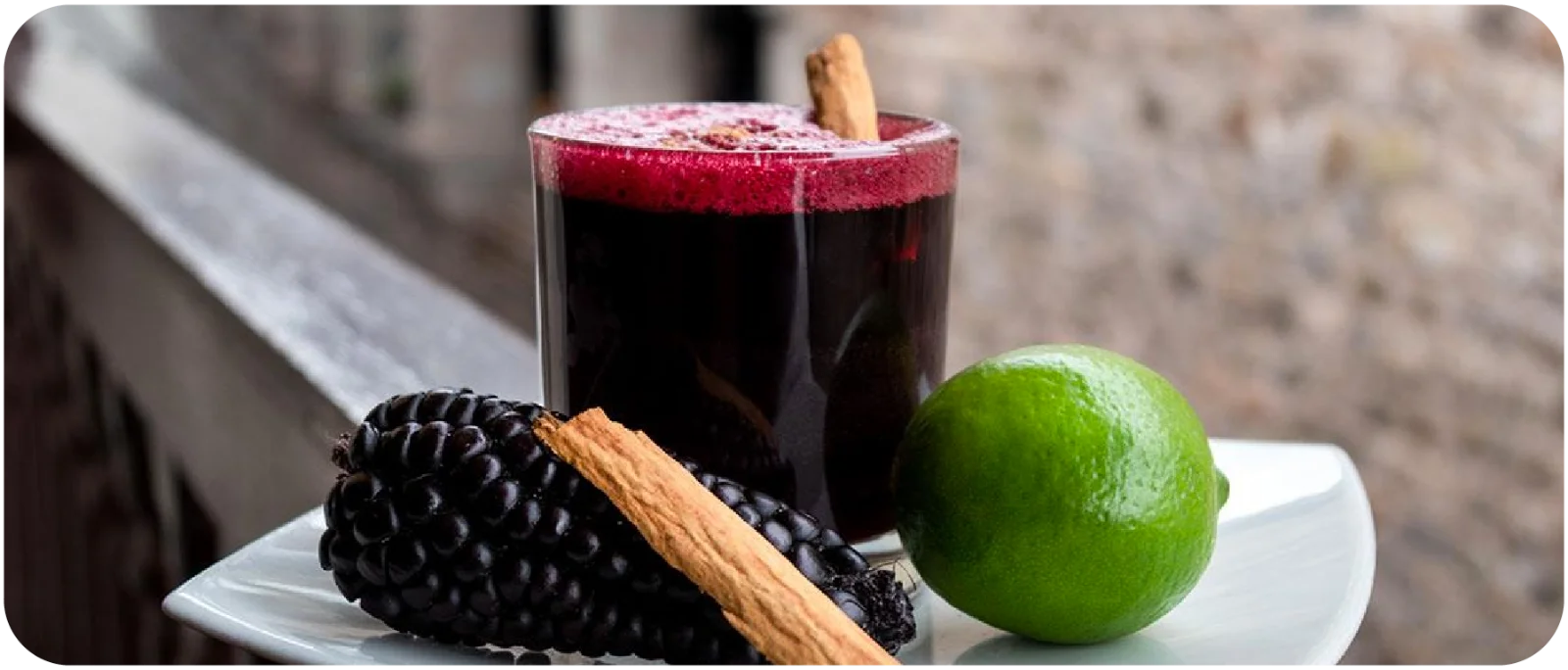
    It is one of the most famous drinks in Peru without a doubt and currently has great international recognition. Chicha Morada is a very versatile drink that can be taken for breakfast, lunch, and dinner, it goes with everything! It is made with purple corn, a kind of corn that is grown in the Andean region.

    The characteristic flavor of chicha Morada is because, in addition to boiled corn, it contains ripe pineapple and lemon, which gives another dimension to the flavor. It is sweet and has an acid touch, it is usually also infused with cinnamon and cloves —sometimes strawberries and apples are used— It is common that in Peruvian restaurants the first thing they offer you to drink is this traditional chicha Morada.

    Its color can vary between a strong purple and black that looks like blood, it is served fresh in street markets, in fine restaurants, and at home kitchens throughout Peru. It is a mix of a local gastronomy classic – basic or with some modern adornments – and a relic that has survived centuries of colonial invasion.

    Check out: INCA’S FOOD ROCOTO RED HOT PEPPER

    Beneficial for health

    Purple corn is a food with a powerful antioxidant effect, thanks to anthocyanins. They help tissue regeneration, promote blood circulation, and lower cholesterol. On the other hand, purple corn promotes the formation of collagen, reduces the risks of arthritis, diabetes, and atherosclerosis. It is a superfood that provides great health benefits.

    So while the purple corn doesn’t add a specific flavor to the drink, it adds color and health as a base for savoring the fruits and spices. A crystallized sugar with Chancaca honey is generally added to sweeten the drink (particularly chicha Morada bottled for supermarkets).

    The drink that conquered the conquerors

    As we immerse ourselves in the daily life of pre-Hispanic civilizations, we discover that among the peoples of America and especially Peru, there was a certain predilection for the development of beverages, which were made from the different native plants of the continent.

    To make Peruvian chicha, the corn kernels were split and soaked in water. Then, the woman in charge of preparing the chicha, took a little of that soaked corn, chewed it, and put it back together with the rest, but already with the ferments of her own saliva. This preparation was boiled for several hours and then strained. The liquid obtained was fermented in clay pots until the desired fermentation was obtained.

    In general, Peruvian chicha was fermented at low alcohol levels, to be consumed daily as a food drink. But those that were left to ferment for longer, achieved a high alcohol content and were destined for celebrations and rituals, where consumers generally ended up drunk.

    When the conquerors arrived in Inca lands, the story goes that Atahualpa received them with gifts, among them glasses with Peruvian chicha. The conquerors were amazed by this drink – and perhaps drunk, too – and adopted it as their own to replace the wine that had not yet arrived from Mexico or Spain.

    It was the arrival of the Jesuits, which put a limit on the consumption of Peruvian chicha, arguing that it was contrary to the liturgical traditions of drinking wine and that these drinks from the Peruvian valleys induced constant drunkenness. Thus, Peruvian chicha was relegated for consumption to the natives of these lands.

    Check out: FOCH SALSA PARA TALLARIN SALTADO

    Chicha morada representing Latin America

    Although the process of chewing corn and then fermenting it has been gradually replaced by the use of yeast as a ferment, the tradition of girl consumption extends to almost all Latin American countries. This is a consequence of the place occupied by corn in pre-Hispanic crops.

    Of the drinks of the Peruvian valleys, chicha is the one that has managed to stay throughout history. Despite the prohibitions, the religious attacks it suffered, the native peoples have managed to maintain this tradition throughout the centuries.

    Here in Kosmos Peru, we have wanted to rescue the value of Peruvian chicha, as a cultural element of our oldest traditions. It is not only to pay tribute to it, since Peruvian chicha is so present today, as in the past, but we have wanted to rescue its importance because even in gastronomy, our present is built by rescuing everything that was part of the conformation of the nations that we have today.

    Recipe of chicha morada

    Ingredients

    •         ¾ kg of dried purple corn
    •         4.5 liters of water
    •         1 ripe pineapple
    •         4 lemons
    •         1 cup of sugar
    •         7 cloves
    •         1 cinnamon stick
    •         3 apples

    Preparation

    1.  Wash and remove the peel from the pineapple and apples.
    2. In a saucepan, pour three liters of water, the pineapple, and apple peels. Also, add the purple corn, the cloves, and the cinnamon stick. Cook over high heat until reaching a boiling point.
    3. When the water boils, lower the heat to low and cook for 50 minutes.
    4. After that time, strain the liquid and reserve.
    5. Next, add a liter and a half of water to the saucepan with the fruit peels and purple corn. Cook over high heat until it boils. Lower to a simmer and cook for 45 more minutes.
    6. After this time, strain the liquid and mix it with the previous one already reserved. Refrigerate in the fridge for at least 2 hours.
    7. Cut the pineapple and apple into small cubes.
    8. When serving, add the lemon juice to the chicha, add the sugar, and add the chopped fruits. Serve cold.

    If you like to have a refreshing and nutritious drink, do not hesitate to prepare this delicious chicha Morada from Peru. Everyone at home will ask you to prepare it frequently.

    Check out: UCHARIMA CLAVO DE OLOR SELECCIONADO

  • Interesting facts about the Peruvian Rocoto

    Interesting facts about the Peruvian Rocoto

    The Rocoto is a native of Peru and dates from pre-Inca times, its cultivation dates back some 5,000 years ago. Its original Quechua name is luqutu or rukutu. Its presence is documented by the ancient Peruvians of the Paracas, Nazca, Mochica, and Chimú cultures through textiles, ceramics, and domestic remains. The Rocoto is the flagship chili of Peru, it is consumed fresh, in paste, dry, and/or ground.

    It is a spicy fruit, but the intensity can be controlled by extracting the veins where the seeds are found since they are the ones that contain the highest amount of spiciness in this vegetable. In the southern part of Peru, they are usually removed and later eaten stuffed with meat.

    Check Out: INCA’S FOOD YELLOW HOT PEPPER

    In addition to being a gastronomic gem among lovers of tasty foods, this aji has analgesic and anticancer properties. This is due to capsaicin, the same substance that causes irritation on the palate. According to a study conducted by the Chinese Academy of Medical Sciences, individuals who consumed spicy at least twice a week had a mortality rate 10% lower than those who did not.

    Besides, these types of foods are attributed to healing properties, since they also relieve joint ailments applied topically. Moderate consumption of hot pepper helps to improve circulation and prevent cardiovascular problems, while, due to its fiber content, it regulates intestinal transit and combats constipation.

    Know some uses that you can give to Rocoto

    As food

    Due to its spicy flavor, it is used in the preparation of salads, pickles, hot sauces, and the preparation of stews such as stuffed hot pepper, a typical dish of the department of Arequipa, cebiches, tiraditos, and cheese chaupi.

    As medicine

    The chili pepper (including the hot pepper), in addition to being tasty, brings interesting benefits to its consumers.

    Hot pepper has an amount of vitamin C four times higher than that of orange and, like other fruits, its antioxidant properties are an essential part of a healthy diet recommended to prevent cancer, it also contains phosphorus, fiber, calcium, iron, carotene, thiamine, riboflavin, and niacin, among others.

    When ingested, more salivation is generated and all the taste buds are activated at the same time and it has a bactericidal effect, thus helping to eliminate bacteria from the stomach. It promotes the accumulation of lipids and bicarbonate and forms a protective barrier for the stomach lining.

    The main component of chili pepper is capsaicin, which protects DNA from carcinogens and reduces the possibility of prostate cancer. Studies indicate that the hot pepper would prevent the multiplication of cancer cells.

    Chili is also a low-calorie source (100 g of hot peppers are 23 calories). Also, capsaicin helps prevent fat from accumulating in the body and inhibits the proliferation of fat cells.

    The chili pepper also has an analgesic capacity, since it inactivates the sensory neurons that transmit pain. It stimulates the nervous system, more endorphins are produced (opiate compounds associated with satisfaction and well-being). It helps to secrete insulin, which serves to complement treatments that diabetics follow.

    Check Out: INCA’S FOOD CANNED AJI ROCOTO PEPPER

    The hot pepper is an excellent stomach protector, it is recommended for the treatment of ulcers, gastritis, colitis. In general, it benefits the digestive system since the capsaicin in hot peppers stimulates the secretion of gastric juices and promotes the accumulation of lipids and bicarbonates in the stomach lining, strengthening it and facilitating the digestive process.

    It has anti-inflammatory and antibiotic properties. The sensation of controlled pain produced by the hot pepper on the tongue is the same as that we feel when we practice sports, in response our body produces endorphins that inhibit certain parts of the brain producing a sensation of pleasure that generates a certain addiction difficult to describe.

    It is useful to combat diabetic neuropathy, administered as topical capsaicin relieves pain associated with psoriasis and osteoarthritis. It is good for hypertension because it acts as a dilator of blood vessels, it is recommended to relieve discomfort and lower the pressure of people who suffer from this disease.

    Types of Rocoto

    Rocoto de Monte. Also called de la huerta. It grows in the mountains and has a shape similar to that of the pepper. It is medium in size and quite spicy.

    Rocoto serrano. It is the hot pepper that grows in the central jungle. Larger and meatier, it has a delicious flavor but is quite hot.

    Recipe to prepare Rocoto Relleno

    Ingredients

    • 10 Rocoto
    • ½ cup of sugar
    • ⅓ cup vegetable oil
    • 6 tablespoons of aji panca paste
    • ½ kg. loin chopped into very finite squares (or ground beef)
    • 2 bay leaves
    • 1 kg red onions, chopped
    • ¼ teaspoon sugar
    • 2 tablespoons of maní, toasted and coarsely chopped
    • ½ teaspoon dried oregano
    • 5 black olives, chopped
    • 2 hard-boiled eggs, chopped
    • 1 tablespoon of chopped parsley
    • 2 tablespoons black raisins
    • 3 eggs
    • 1 can of evaporated milk
    • Salt and pepper

    Check Out: INCA’S FOOD AJI ROCOTO PEPPER VIDRIO

    Preparation

    • To reduce the itchiness of the Rocoto: cut a small cap on the top of the Rocoto and using a spoon remove the seeds and veins from the inside. Be very careful. I recommend that you wear gloves to protect your hands and wash well when you are done. Do not touch your eyes or face in any way.
    • Put the Rocoto in a pot with water to cover them, a tablespoon of water, bring to a boil, turn off the heat, drain the water and add fresh water. Repeat this operation three times. Drain and cool the Rocoto. Reservation.
    • Meanwhile, in a pot over high heat, heat the oil, fry the aji panca, add the meat and the bay leaf. Stir occasionally until the meat changes color.
    • Stir in the onion, ¼ teaspoon of the sugar, salt, and pepper.
    •  Add the peanuts, oregano, olives, hard-boiled eggs, parsley, raisins, salt, and pepper to taste.
    •  Preheat the oven to 350 ° F.
    • Fill the Rocoto with this mixture. Arrange the stuffed peppers in a rectangular or square dish.
    • In a bowl beat an egg with a can of evaporated milk, salt, and pepper. Pour over the rocks.
    • Separately beat two eggs until they are very thick. Place a tablespoon on each Rocoto and put the reserved cap on top of each one.
    • Bake for 15 minutes.

    Storage

    To prevent your rocoto peppers from spoiling, refrigerate them once they have been sourced or grown. It’s critical not to leave them un-refrigerated, or else you may gradually switch between being yellow and red.

    If you choose to store or cultivate rocoto peppers, spread them out so they can not spoil. Otherwise, you may want to use some yellow peppers and eventually use reds.

    Varieties

    The only kind of this pepper is the Rocoto (Capsicum pubescens), though this variety has many distinct forms, reminiscent of other capsicums. As you can tell, the definitive trait of the rocoto is the absence of white seeds . Like all capsicum fruits, the rocoto comes in a variety of hues from bright yellow to orange to red.

    What type of taste does rocoto pepper have?

    In the process, consider a bell pepper and how its taste compares to a tomato, yet differentiate it from the power of habanero to have a fondness outline for a rocoto pepper. It has a sprinkle of grassy freshness, too, which can help balance its rich spice. The flesh reveals crunchy but succulent, demonstrating that this vegetable is a fruit, not just and not the veggie individuals presume.

    Rocoto Pepper Vs. Manzano

    Rocoto peppers, also used in the production of hot sauce, are also known as Manzano peppers in some places. However, they are not the same; the plants differ in geography and flavor profile. While the plants that are referred to as Manzano peppers might sometimes be found nearby, they are, in fact, slightly different from the peppers. These peppers are often hotter than those referred to as Manzano peppers.

    Rocoto peppers‘ size and appearance.

    The American pepper plant’s size varies widely from briefly vine-like to truly crouching down near the ground in Bolivia, while the pointed or pear-shaped pods can range from 2 to 3 inches.

    Some peppers have stood up to the test of time and won many players of black seeds in various colors from bright red to yellowish and orange.

    Cooking With Rocoto Peppers

    Perfectly prepared cornstarch gave you seductive sauces! Argentine chefs relish paló (cocktail sauce) made from such peppers. However, these peppers are usually grown near the ocean, and they get eaten by harvest season.

    Rocoto peppers are also added to make ceviche since their heat level is perfect for this purpose. I also enjoy spicy foods and use rocoto peppers to make stuffed and baked entrees with meats and cheeses inside.

    And ready! Now you can enjoy the best benefits of the Rocoto with this great recipe.

  • Amazing tips for the best Peruvian Ceviche

    Amazing tips for the best Peruvian Ceviche

    Currently, the Peruvian Ceviche is considered a cultural heritage because this dish represents the country’s unique flavours, smells, colours, and even way of life. Ceviche is made from various types of fish bathed in lime juice until it’s safe for consumption.

    In the middle of the 20th century, the use of orange juice was changed to lemon juice and the marinating time was reduced. In turn, the Japanese immigration to Peru helped shape the technique, with more precise cuts of the fish and shorter processing times.

    Many of the ingredients needed for an authentic tasting Peruvian Ceviche can only be found in Peru, but it’s possible to recreate it in any part of the world.

    Although it stands out for its apparent simplicity when preparing it, it is always necessary to take into account some of these recommendations so that the ceviche you prepare at home is healthy and of the highest quality.

    Read More: WHAT IS PERUVIAN YELLOW SAUCE MADE OF?

    Buy the fish in a place that guarantees freshness and good quality

    To recognise if the fish is of the day, the skin and scales must be shiny, the gills must have a deep red colour, and must not produce a strong odor. All varieties of white fish are good for Peruvian Ceviche.

    Choose the right fish to make the dish

    The cooking technique with which the ceviche is prepared consists of cooking the fish with the acids of the lemon, so the fish must be very fresh. Nowadays, it is recommended to previously freeze the fish with which the Peruvian Ceviche is going to be prepared, just like when making sushi.

    The most suitable fish are those with soft and firm meat such as sea bass are ideal. Those with fibrous meat such as cod or hake should be avoided. It can also be made with bluefish, such as mackerel or bonito, but it is recommended to cure them in salt for 10 minutes before using them to give them texture and flavor.

    The way the fish is cut is essential

    For ceviche, the fish is usually cut into dice, approximately 1.5 cm in size, in this way, all the essence of the fish will be felt in your mouth. It is advisable to cut the fish once it is thawed and ready for use.

    Once the fish is chosen, you must clean it well of scales, remove the bones and remove the skin since it is uncomfortable when eating ceviche.

    Read More: PERUVIAN BREAKFAST: FOOD TO START THE DAY

    The importance of good use of lemon

    Lemon is a key ingredient for a good Peruvian Ceviche. Lemons are squeezed and used immediately, so squeeze the lemons shortly before serving the ceviche and without pressing the peel excessively.

    This will prevent the preparation from becoming too acidic and having a bitter taste. Although an important part is wasted, to make ceviche, it is best to cut the lime in half and squeeze to remove three-quarters of the juice, and then discard the remaining lime.

    Delicate cuts

    Onion is also a fundamental ingredient in ceviche, but you should never cut it into large pieces. It is advisable to cut it finely in julienne. It is also important to wash it well in cold water and ice so that it is fresh, clean, and crisp before placing it in the preparation. Avoid using white onions because they are more bitter.

    Use a stainless steel bowl

    A secret to preparing a good Peruvian Ceviche is to rub the entire surface of the bowl, where you are going to place the fish, with a slice of ají limo. It is recommended not to use plastic or even porcelain bowls because they could transmit the flavors and aromas of previous preparations. It is preferable to choose one made of stainless steel.

    Likewise, the spoon must not be made of wood, but of metal. The knife must be well sharpened to be able to effortlessly cut all the ingredients, and not mistreat the fish. Although it may not seem like it, the sharper the knife, the less risk of suffering an accident, because it slides better and the hand has to use less force. It is ideal to eat the ceviche with a spoon.

    Check Out: GUARANITA BACKUS ORIGINAL SODA – 300 ML.

    Ingredient order matters

    You must use ice during preparation. To keep the cold, add cubes of ice to the preparation of lemon, salt, and pepper before incorporating the onion and the fish into the mixture. This will allow the ceviche to be cooler when served. This whole process should be quick so that the onion is crisp and the fish is just right.

    To make a traditional ceviche you need to follow these steps: Put the fish in the bowl, add half a teaspoon of salt and stir for a minute or two so that the fish is cured and firm.

    It is important to place an ice cube in the bowl to ensure that the ceviche is always fresh while we prepare it. Add the minced chili, coriander, and lemon juice. Then the onion and finally the celery.

    To serve, place a fresh onion base on the plate and top with the fish. Remove the excess ice and add the garnish.

    Don’t take too long during the preparation

    The preparation of the ceviche mustn’t last more than 3 minutes because between serving and eating it takes about 7 minutes, enough for it to be ready. If the fish takes longer, it cooks too much because the acidity penetrates it a lot and highlights the lemon flavour more.

    These tips will undoubtedly help you prepare an authentic Peruvian Ceviche.

    Check Out: NESTLE IDEAL CREMOSITA LECHE EVAPORADA X 12.5 FL. OZ.

    Types of seafood used in Peruvian ceviche

    Ceviche is a popular Peruvian dish from fresh raw fish cured in citrus juices. The citric acid in the juice “cooks” the fish, turning it from a pinkish colour to opaque white. Ceviche is typically served with chopped onions, tomatoes, and cilantro. Lime or lemon juice is the most common type of citrus used in ceviche, but orange and grapefruit juices are also popular.

    Most types of seafood can be used in ceviche, but the most common types are white-fleshed fish like tilapia, cod, snapper, and sea bass. More exotic seafood options include octopus, shrimp, crabmeat, and scallops.

    Ceviche is a healthy dish because it uses natural ingredients without added oils or frying.

    What to serve with Peruvian ceviche

    Peruvian ceviche is a dish made of raw fish cured in lemon or lime juice. It is typically served with boiled sweet potatoes, grain on the cob, and concha (roasted Peruvian corn).

    While there are many variations of ceviche, these are the most common sides served with it. If you’re looking for something to drink, a cold beer or Pisco sour goes great with ceviche.

    Variations of Peruvian ceviche

    Peruvian ceviche is a dish that has many variations. Different types of fish and other vegetables and fruits can be used. The most common ingredients are fish, lime juice, onions, and chili peppers. But some variations include coconut milk, avocado, and even hearts of palm.

    The dish’s flavours can also vary depending on the spices used. Some people like to add cumin or oregano, while others prefer to use chili powder or hot sauce. Peruvian ceviche is a versatile dish that can be adapted to fit the individual’s taste.

    Check out: INCA’S FOOD ROCOTO RED HOT PEPPER X 15.7 OZ.

  • What is Peruvian Yellow sauce made of?

    What is Peruvian Yellow sauce made of?

    Peru is usually on the list of countries to visit for many tourists around the world due to its culture, history, traditions, landscapes, and more. However, this beautiful country also manages to attract thousands of traveler thanks to one of the elements that most represents the identity and hallmark of this beautiful country: its gastronomy.

    Peruvian gastronomy forms an important part of the history of its people and the ancestral knowledge of its inhabitants, as is the case of the Peruvian yellow sauce, which is considered the most important sauce in Peruvian cuisine.

    Check Out: INCA’S FOOD – FROZEN CAIGUA X 4 UNITS

    History

    The story of the Peruvian yellow sauce explains that in the 19th century there was a cook who, in addition to being adorable and noble, prepared a tasty cheese sauce garnished with egg, to accompany the potatoes from the Mantaro River Valley.

    Over time, the workers nicknamed this cook “la huancaína.” That is why her star dish was known at that time as “papa a la huancaína”, a name that lasts until today and that was spread throughout Peru and the world, as well as the recipe.

    Love and other ingredients

    The Peruvian yellow sauce was usually prepared with crumbled cheese, along with boiled hot pepper, ground, and mixed with milk. Nowadays the hot pepper is not used much in its preparation.

    This ingredient was changed over time by the yellow pepper. In addition, it is also currently decorated with olives and lettuce. The huancaina sauce is so famous that it has been industrialized and it is possible to find it in all supermarkets already prepared.

    In the recipe, the yellow pepper without seeds is usually seasoned together with onion and garlic. Thus it manages to give it that smoky touch. Then they are mixed with cookies, cheese, milk, and yellow pepper. After blending everything, strain the cream in order to avoid lumps.

    Some cooks in Peru use a batán to prepare the sauce or cream. The process is longer and more difficult, but it is more enjoyable and the taste is different.

    Now that you know a little about the history of this popular sauce, below we will present some of the dishes in which its flavor stands out along with the other ingredients.

    Check Out: D’ONOFRIO BONBONS BOMBONES X 72 ML.

    A very versatile sauce

    The Peruvian Yellow Sauce can be served with quail eggs, watercress, risotto, fried yucca, potato chips, or tortilla.

    However, it can also accompany other varieties of dishes and be used with tequeños, vegetarian rice with chicken, or with any other recipe you like, there are many culinary horizons that you can reach when trying new mixtures with the huancaina sauce.

    This sauce can stand out at any party or gathering as a dip. If you mix the Peruvian Yellow Sauce with Arborio rice it becomes an incredible risotto. With all this in mind, it can be impossible not to think of pasta to combine it with Huancaína, right?

    Pasta with Huancaína sauce has been presented as an alternative for lunch in recent years and is now served in restaurants of all levels, almost always accompanied by a churrasco. This Peruvian Yellow Sauce provides many interesting flavors when it’s combined.

    You can even sauté some vegetables that you like and serve them with the pasta. This will add color to your plate and it will be a complete meal with your servings of vegetables.

    However, the main mixture is the huancaína potato that we mentioned earlier. This is a cold dish that is served as an entrance food. The flavor of the Peruvian Yellow Sauce recipe and its ease is what makes it adaptable to multiple options.

    It is also customary – for family gatherings – to serve the huancaína sauce with baby potatoes since it will have the same flavor as the original recipe, only that it will look more beautiful for using a small potato.

    Likewise, it can be used as a regular sauce (to vary the use of other creams such as mayonnaise, ketchup, or mustard) served with hot dogs, nuggets, or pieces of chicken or grilled meat.

    Therefore, dare to prepare this recipe and enjoy a delicious dish. You will not regret having an alternative with which you can delight your family.

    What is Yellow Peruvian sauce, and where does it come from? 

    Peruvian Yellow sauce (Aji de gallina) is a spicy, tangy sauce made from various spices and hot peppers. This sauce is commonly used as a condiment on chicken or fish and as a standalone dipping sauce or salad dressing. Peruvian Yellow sauce is believed to have originated in the Andes region of Peru, typically served with grilled chicken or fish.

    The sauce is traditionally made by combining various fresh ingredients such as “ají Amarillo” (Yellow Peruvian chile), garlic, cilantro, and onion with water. The mixture is then cooked over medium heat until the ingredients are incorporated, and the desired consistency is reached.

    Peruvian Yellow sauce is typically served with rotisserie chicken or other grilled meats. However, it can also be used as a condiment on sandwiches, burgers, and salads.

    How did the sauce develop, and what are its origins? 

    Sauces are one of the most critical components of many dishes. They can add flavor, richness, and moisture to a plate. Sauces can be made from a variety of ingredients and can have different origins.

    Some sauces are based on a simple mixture of flavors, while others take more time and effort to create. Here is a look at some of the most popular sauce types and their origins. Sauces are a common ingredient in many dishes. They can enhance the taste of a word and add flavor and richness to a meal.

    Check Out: INCA’S FOOD AJI ROCOTO – FROZEN ROCOTO HOT PEPPERS

    What ingredients are used in Peruvian Yellow sauce, and what makes it unique?

    Peruvian Yellow sauce is a unique condiment that is made from a variety of ingredients. Some ingredients used in Peruvian Yellow sauce are tomatoes, onion, garlic, chili peppers, and vinegar. This unique combination of these ingredients makes the sauce what it is today.

    How can I make my Yellow Peruvian sauce? You can use these various methods to make your Yellow Peruvian sauce.

    Using a blender to make your own Peruvian Yellow sauce is common. First, chop the ingredients and mix them with the desired amount of water. Then add the mixture to a saucepan and boil it until ready.

    Another method of making Yellow Peruvian sauce is to mix the ingredients in a saucepan and cook them on low heat. This method allows you to control the amount of water added to the mixture.

    What makes the sauce taste spicy and delicious?

    Peruvian Yellow is one of the world’s most popular and valuable colors. It is derived from the leaves of a small tree that grows in the Andes Mountains. The color is so prized that it is used in traditional Peruvian weaving and dyeing techniques.

    The color is a rich, golden yellow that lasts up to 100 years. It is also known as “Peruvian Gold” and has been used in Peruvian cooking since the Inca Empire. It is said to have a very subtle taste that can be used to give dishes a touch of spice without adding any heat.

    Check Out: D’ONOFRIO HELADO COPA K-BANA

    What are some popular dishes that feature Yellow Peruvian sauce?

    It is also known as ají dulce or aji Amarillo in Spanish and is an intense and sweet chili sauce used in many Peruvian dishes. It can be found at most Latin American groceries and some Asian markets.

    The sauce is made from various peppers, including the jalapeño pepper, and has a fruity flavor with a kick. Some popular dishes that feature Peruvian yellow sauce are the Peruvian chicken soup, Peruvian shrimp fried rice, and Peruvian beef empanadas. Sauces are the main ingredient in many dishes, especially meat and seafood.

    The sauces can vary from sweet (such as the Peruvian yellow sauce) to spicy (such as the habanero sauce). Peruvian yellow sauce is also made with Peruvian finger chili pepper.

    Peruvian yellow sauce is a condiment used in cooking, especially when preparing and frying foods such as Peruvian chicken soup, Peruvian shrimp fried rice, Peruvian beef empanadas, and other recipes.

    Check Out: Peruvian Food

  • The best Peruvian desserts

    The best Peruvian desserts

    Everyone is familiar with the most amazing dishes, stews and roasts with the flavors of Peru.

    They enchant every pallet with its rich species that derive from many different cultures. But you probably don’t know the huge variety of Peruvian desserts that exists.

    Peru definitely has a sweet tooth and knows how to satisfy this craving. Check out some of Peru’s most popular desserts. 


    Peruvian desserts with fruit: Mazamorra Morada

    With a varied weather that can go from extra hot in summer time to freezing in winter, people in Lima have grown accustomed to prepare delicious Peruvian desserts with a warm and comforting flavor.

    Mazamorra morada is a Limeñan dessert with a jelly- like texture that can be enjoyed all year round but people like it, especially on cold months.

    This dessert is unique because of its exotic flavors, the base is Peru’s purple corn and has hints of cinnamon, clove, pineapple, cherry, peach, apricot and many other options of fresh and dried fruits.

    This mixture is then thickened by using sweet potato flour. One of the most original Peruvian desserts without a doubt. 

    Picarones 

    Not only one of the best Peruvian desserts, this is a best seller for street vendors. Picarones could be considered the equivalent of a doughnut, with a sweet, sticky and dripping consistency.

    Picarones are made from sweet potato flour and fried for a couple of minutes until they reach a golden color and crisp texture. After being fried, they are topped with honey, cinnamon, essence of orange and other sweet spices.

    This dessert can also be the perfect treat or snack, you can have them for dinner with a glass of milk or as the perfect ending of a huge meal. Find the delicious Picarones doughnut mix ready to prepare here. 

    Check out: INCA’S FOOD – FROZEN CAIGUA X 4 UNITS.

    Alfajores with Manjar blanco

    Alfajores are definitely one of the most popular Peruvian desserts, and their popularity extends all over Latin America. Alfajores are a type of ultra soft round cookies made from corn flour, they are so crumbly that they resemble buttermilk cookies.

    You take two of these soft cookies and “glue” them together with manjar blanco, a sweet caramel and milk cream, and sprinkled completely with powdered sugar. You can find alfajores almost anywhere in Peru, or you can make them and enjoy them fresh. Their taste is a little dry but  super sweet, so they go great with coffee or milk. 

    Peruvian desserts for parties: Pionono

    Pionono is one of the most decadent Peruvian desserts, some people say it’s a different version of the jelly roll cake. This addictive cake is typically filled with manjar blanco, but it can also go with fruit filling or even whipped cream. And it’s precisely its manjar blanco (the caramel and milk cream we mentioned before) what gives this dessert a Peruvian twist. 

    You can make this recipe yourself since it’s so simple. Bake a standard cake on a baking sheet, it will result in a very slim and long cake. When it’s done spread manjar blanco all over it and roll it up. You can serve it as the perfect dessert for a party or dinner. 

    Leche Asada (Peruvian roasted milk custard)

    This one of the most ancient Peruvian desserts, prepared as early as Colonial times by the people of Peru.

    Leche Asada is considered as a low budget version of the Crème Brûlée because it shares the same technique and almost the same ingredients. Leche Asada leaves you with a sweet yet simple flavor on your mouth after enjoying it.

    The classic Leche Asada recipe requires whole milk, eggs, sugar, vanilla and cinnamon; although some modern recipes include condensed milk or evaporated milk for fluffier texture.

    Despite what you might think because of its taste and its brown burned top, Leche Asada does not require caramel. You can serve it cold or warm in individual glasses. 

    These are only a few examples of what Peruvian desserts have to offer, all of them have a little bit of Peruvian heart in them and your mouth will be watering since you start making them.

    Try out each one of these recipes and experiment with your favourite ingredients, they’ll be perfect for a hungry afternoon or to wow your dinner guests.

    There are endless possibilities when it comes to desserts in Peru. Whether you’re a sweet tooth or looking for something unusual, there’s sure to be a delicious treat to tempt you. Here are six of the best Peruvian desserts:


    1. Churros: These crispy, deep-fried doughnuts are commonly found in street carts and restaurants throughout Peru. They’re usually filled with various flavors, including chocolate and pandan flavors.

    2. Mote con Tema de nuevo (Milk yolk cake) This is a sweet and simple cake made from milk, eggs, and sugar. It’s not quite as sweet as typical cakes and can be served with or without the marzipan layer.

    3. Mate de coca (Coca leaf tea) This bitter, milky tea is made from the leaves of coca plants. There are several methods for preparing it, but the most popular way is to boil the leaves and add sugar to make a sweetened mate.

    4. Chicha (corn beer) A local drink similar to beer but made from corn and often flavored with fruit or spices, it is a cheap, filling way to quench the thirst of farms and workers in the highlands.

    5. Queso Blanco (white cheese) Once a staple of the Peruvian diet, queso Blanco is now produced mainly for export and is often made from imported milk and other dairy products.

     Check out: D’ONOFRIO BONBONS BOMBONES X 72 ML.

     What makes Peruvian desserts so unique? 


    Many Peru tourists are familiar with the country’s spicy, hearty dishes. But for those who enjoy sweet treats, there is much to love about the Peruvian dessert repertoire. From chicha Morada – an ear of purple corn drink popular in the Andean region – to ice cream made from fresh fruits and nuts, these delicacies offer unique flavors and textures that are hard to find elsewhere.

    Add in traditional desserts like a guinea pig (a kind of turnover filled with sweetened condensed milk), cruller (pastries filled with nuts or chocolate), and Torres (pumpkin desserts), and you have a recipe for an unforgettable trip to Peru.


    The Classic Desserts: Flan, Tres Leches Cake, Pisco Sours

    There’s something undeniably special about desserts from Peru. Whether the creamy, fluffy pies and tarts filled with sweetened condensed milk or the dense and chocolaty puddings, they all come together to form a memorable experience. And while many Peruvian desserts are pretty complex in flavor, a few are perfect for beginners. Try out one of these simple favorites for an unforgettable dessert experience. Sweet Potato Pudding, Mate de Coca, Pollo al Horno

     Check out: Peruvian Food

    Sweet and Savory Snacks: Choclo Porridge, Arequipe Chips

    Snacks have always been a part of life. From sweet to savory, they can satisfy any hunger. This article will discuss some of the best sweet and savory snacks that are perfect for any occasion.

    First up is choclo porridge. This popular snack is made from cornmeal, milk, sugar, and butter. It is smooth and creamy with a hint of sweetness and can be served warm or cold. Arequipe chips are also a delicious savory snack option. These chips are made from corn, vegetable oil, and salt, providing a crispy and salty taste that goes well with spicy sauces or dips.

    Arequipa is the perfect place to start a tour in Peru, as it has many historic sites, including churches and the La Recoleta Cemetery. The city is also trendy for its food and cuisine, with many restaurants and street vendors serving traditional Peruvian dishes. In addition, Arequipa is the gateway to the Colca Canyon and the Colca Valley.


    Cappuccino Crème Brûlée with Caramelized Bananas 

    This recipe for cappuccino creme brulee is a creamy and indulgent way to enjoy your morning coffee. The caramelized bananas add sweetness and depth of flavor to the dish, while the espresso provides a delicious background contrast. This recipe is easy to make and will impress your friends and family.

    Cappuccino creme brulee This is the best recipe I have ever used. My family loved it. I added a little extra cream and milk, and it was still prosperous and delicious. The Brulee on top was amazing!

    This is the best recipe I have ever used. My family loved it. I added less sugar and used skim milk instead of whole milk to make it a creme brulee type dessert.

     Check out: D’ONOFRIO HELADO COPA K-BANA X 103 ML.

    Gelato Favorites: Raspberry, Peach, Piña Colada

    Gelato is a famous Italian ice cream that can be made with any flavor or combination. Some popular gelato flavors are raspberry, peach, piña colada, and strawberry cheesecake. Many people enjoy trying different gelato flavors to find their favourite. Some people prefer the more tart flavors, while others prefer the sweeter flavours. Whatever your favourite gelato flavor may be, there is sure to be a flavor out there that you will love.

    The recipe for this Gelato is the same as my other super simple ice cream recipes. You can find all of my fabulous simple ice cream recipes here! I have tried different flavours of Gelato and have found that there are many different ones out there to try.

  • Tasty Pollo al Sillao: 8 steps Peruvian Food Recipe

    Tasty Pollo al Sillao: 8 steps Peruvian Food Recipe

    Sometimes we need a quick recipe, but that does not means a quick meal should not taste really good. Pollo al Sillao or also known as The Peruvian Sillao chicken is a great example of a quick food recipe without losing great taste. This recipe takes about 30 minutes or less (If you don’t marinate the chicken) and it will bring you a delicious meal.

    The sillao sauce used for the Sillao chicken is a Peruvian ingredient, also known as soy sauce, this ingredient is a result of the gastronomic exchange Peru has gone through, mixing Asian cuisine, Japanese cuisine and South American cuisine. The name of the Sillao sauce comes from the Cantonese name of soy sauce “Siyau” (豉油).  

    This preparation is just perfect for a delicious meal, you can serve rice, French fries or salads as an accompaniment. You can save even more time for this preparation if you leave the chicken marinating through the night and cook it the next day, it will acquire all the sauce taste.

    Check out: Candies Collections

    Ingredients (4 portions)

    • 8 chicken pieces
    • 3 tablespoon of grated ginger
    • 1 teaspoon of anise liquor
    • 1 teaspoon of garlic paste
    • 1 teaspoon of Chinese cinnamon (Regular ground cinnamon also works well )
    • 1 teaspoon of cumin
    • 3 tablespoon of sesame oil
    • 8 tablespoon of Sillao Peru sauce (Regular soya sauce might work as well)
    • 1 teaspoon of sugar
    • 1 tablespoon of cornstarch
    • 1 tablespoon of oyster sauce
    • Sesame seeds to taste
    • 1 big red pepper
    • 4 sticks of scallions
    • Salt and pepper to taste


    Preparation

    1. On a small bowl prepare the sauce, for this you need to mix together the grated ginger, the anise liquor, the ground cinnamon, the cumin, the garlic paste, the sesame seeds and oil, the ouster sauce, the sillao sauce and salt and pepper. Mix everything well and keep it.
    2. Place on a big bowl the chicken pieces previously cleaned properly. Add the sauce you prepared and stir everything, make sure all the pieces have enough sauce.
    3. Macerate the chicken at least for 30 minutes with the sauce. For a better taste, marinate for 2 hours.
    4. Now, warm up a pan at high heat and brown the chicken preys without adding the sauce. Make sure to cook it well from both sides.
    5. Once the chicken is brown, you need to low lower the heat and add the liquid and the sauce left on the bowl. Cover the pan and let the chicken cook well, usually it takes about 30 to 35 minutes.
    6. After 20 minutes since the chicken has been ready, let it cool down at room temperature and take apart some of the sauce with a small bowl. Dissolve the cornstarch on this sauce and add it to the chicken. If there is not enough sauce, use cold water. Cook for another 20 minutes at low heat.
    7. Add the sugar to the preparation and mix well. Also add the red pepper chopped into slices and the scallions chopped into really small slices. Cover the pan and cook for 5 minutes.
    8. When the vegetables are cooked, turn off the preparation. Now is ready for serving.

    Check out: CUSCO ANDINO TABLETA CHOCOLATE

  • Spicy Peruvian recipes

    Spicy Peruvian recipes

    Unless you’ve been living under a rock all your life, you probably know that Latin American countries are known for LOVING spicy food. And not in an American fashion, some of these countries have the hottest chilies and peppers and use them in practically every meal every day.


    Peru is no exception to this rule, with its own species of peppers they make some of the most mouth watering dishes. Keep reading to find out the best spicy Peruvian recipes if you enjoy the hot taste in your mouth! 

    Common types of chilies and peppers in Peru

    It is said that the first chilies grew near Brazil and Bolivia, and the seeds spread thanks to animals all over the Andes to places like Peru, Ecuador and Chile. Particularly in Peru two different species grew with ease and are now widely used all over the country: the Pubescens and the Baccatum species. 


    The Pubescens species is responsible for growing the rocoto pepper. Its shape resembles one of a bell pepper in tones of bright red, yellow and orange and brown or black seeds.

    The rocoto pepper might look innocent but it can be as much as 40 times spicier than the jalapeño, getting close in hotness with the habanero chili. The meaty texture of the rocoto makes it perfect for spicy Peruvian recipes as a seasoning or sauce.

    The Baccatum species is where the ajies come from. Their shape is not very well-defined as they can grow long, round and even in irregular shapes, and their color can range from beige or white to bright orange.

    The most used type of aji is aji amarillo, that gets its name from the color it turns when cooked; but there’s actually several types of ajies such as aji Limo, aji Norteño, and aji Panca, among others. These peppers are not good for stuffing, but they serve for great sauces and pastes that can be later used in spicy Peruvian recipes of all kind. 

    Check out: Stuffed Plush Toys

    The most popular spicy Peruvian recipes 

    Even though chilies and peppers are such a huge part of this country’s cuisine by being used to season almost anything, there’s also full recipes that revolve around the pepper or chili as main or key ingredient. From several recipes we’ll present to you the most popular spicy Peruvian recipes you can make.

    Ceviche 

    This is not only one of many spicy Peruvian recipes, it’s also one of the most popular across the country and outside of it. Peruvian ceviche consists of raw fish meat cut in cubes and mixed with ingredients such as purple onion, cilantro and of course ají amarillo


    , all macerated in lemon juice a few moments before being served. The citric highlights and even amplifies the spiciness of the ají in a mouth watering manner. You can read the full recipe for ceviche here.

    Leche de Tigre

    Peru has the amazing ability to use the residues of a dish and turn it into another one. This is the case for Leche de Tigre, which consists of ‘leftovers’ of ceviche. It is a mix of the juice left at the bottom of a bowl of ceviche, ají amarillo and lots of lemon juice. As you might think, Leche de Tigre is used as the perfect cure for hangovers or after drinking alcohol because of the effect this spicy Peruvian recipe has on the body.

    Rocoto Relleno

    Not only the coastal side of the country holds spicy Peruvian recipes. This is a much more filling dish using a different type of chili, the rocoto pepper. Rocoto is a big pepper sized chili that is cut open, emptied and then filled with a mix of ground beef, egg and cheese. The rocoto is then placed in the oven to cook  and the result is a naturally spicy recipe that only gets spicier when hot. If you want to learn the full recipe to cook Rocoto Relleno click here. 


    Now that you know the most common types of peppers in Peru and discovered a few spicy Peruvian recipes, the only thing that’s missing are the ingredients in your kitchen so you get started on the one you’re craving the most! Get to cooking and buy Peruvian chili pastes and sauces here.  

    Regarding spicy food, Peru is the place to go! From fiery chilies to complex sauces, these recipes will have your mouth on fire. From shrimp and chicken to pork and potatoes, there’s something for everyone in this list of Peruvian spicy recipes. Spicy pork and potato stew are perfect for a cold winter night. The sweet potatoes add extra flavour, while the spices give it an extra kick. This is one of our favourite recipes from Peru.

    Aji Amarillo 

    If you’re looking for a spicy food adventure, look no further than Peru. This South American country is home to some of the spiciest dishes on the planet. From fiery chilies to complex sauces, Peru has something to satisfy everyone’s taste for heat. So if you’re up for a challenge, add some Peruvian cuisine to your list of must-try foods. There’s no question that Peruvian cuisine can satisfy your spicy food cravings.

    Aji panca 

    Aji panca is a type of chili pepper that is typically used in Indonesian cuisine. The pepper has a sweet, fruity taste and a mild heat. It is often used in dishes such as sambal, a spicy condiment made with chilies, onions, and shrimp paste. Aji panca can also be used in curries or added to soups. In addition to being used as a condiment, pepper is also used in herbal medicine.


    It is believed to have anti-inflammatory and diuretic properties. Aji panca is a member of the Capsicum annuum species. The plant grows to a height of 1–2 feet (0.30–0.60m). Its leaves are long and narrow, with a serrated edge, and are green in color.

    Ají limo 

    Spicy Peruvian recipes are a must-try for anyone visiting this South American country. The flavors in these dishes are incendiary and will leave your taste buds craving more. From salsas to stews, there is something for everyone to enjoy in this collection of spicy Peruvian recipes.

    Rocoto pepper

    The Rocoto pepper is a variety of chili pepper native to South America. It is related to the bell pepper and has a similar taste and texture. The Rocoto pepper is typically used in sauces and stews and can also be eaten raw. It has a spicy flavour that is hotter than the jalapeno pepper.

    The Rocoto pepper is the result of a selective breeding program by the University of Florida, which began in 2009. The initial goal was to create a pepper that was resistant to black rot caused by bacteria. Huacatay, another pepper variety, was selected in 2014 as the parent of the new array. The fresh pepper is resistant to black rot and also has a higher yield and better taste. The Rocoto pepper is a spicy chili that has a hot flavor profile.

    Huacatay 

    Huacatay (pronounced wah-kah-tay) is a herb with a strong flavor and aroma. The leaves add flavor to dishes, and the root is used medicinally. Huacatay grows in the Andes Mountains of South America. Huacatay is also known as “huacaya,” “kahwaj” in the Andes, and as “hukutaj” in Peru.

    The Spanish word for it is “chilca.” It is used as a flavor and aroma enhancer in Andean cooking. It can be used as a substitute for oregano, basil, thyme, marjoram, or savory. It is also used to cook with. The leaves are tender and have a strong flavor.

    Benefits of Huacatay 

    Huacatay, or Peruvian black mint, is a dark purple-black herb with a strong menthol flavor. It is used to add flavor to food and as a medicinal herb. It is used to treat digestive problems, including acid indigestion. It is also used as a diuretic and for headaches. Huacatay is also used in Ayahuasca brews to “make the medicine go down” and as a flavor. It is sometimes referred to as “Peruvian peppermint.


  • Peruvian Breakfast: Food to start the day

    Peruvian Breakfast: Food to start the day

    Mothers say that breakfast is the most important meal of the day, because that’s when we fill our tanks to start our activities.

    If you believe this too and are looking for new, exciting recipes to enjoy at the break of dawn, why not try a Peruvian breakfast? With it’s delicious and healthy ingredients, your belly will be full and you’ll be looking for the next morning to come and enjoy another one!

    Best Breakfast time in Peru

    First off, let’s establish the eating times in Peru, because they are a little different from other countries’ schedules (yet kind of similar to the one in the U.S). Peruvian breakfast is served commonly between 07:00 am and 09:00 am on weekdays, the fact that they have breakfast so early results in them having lunch between midday and 1:00 pm and dinner at around 7:00 pm or a little later.

    This times of course can vary depending on each family or person’s routine, but the times affect greatly on the type of ingredients Peruvians have for breakfast. On Sundays people have very different and more relaxed schedules, which means they get to have a very different kind of breakfast, with more time to prepare delicious and elaborate recipes to enjoy in family. 

    Main ingredients of a Peruvian Breakfast

    We’ve mentioned before how people in Peru have pretty balanced diets no matter what region of the country they are, this because Peru is filled with fruits and vegetables that are easy to eat either raw or cooked.

    Since this meal tends to be a lot lighter and short during weekdays, Peruvian breakfast common ingredients include bread (either salty or sweet), butter, eggs, ham, jam or other type of cold cut, and oatmeal. Common drinks include milk, coffee, juices made from exotic fruits and many infusions, Peruvians like herbal teas a lot.

    Seeing this list you might think their breakfasts aren’t as different as ours, but then come many other ingredients typical in Peru they enjoy specially when they have to eat out or buy breakfast from street vendors and eat on the go.

    These ingredients include plátano (ripe banana or plantain), choclo, pork, lamb, sweet potato and even cold fish in the coastal zone of Peru. 

    Check Out: INCA’S FOOD ROCOTO RED HOT PEPPER

    Popular recipes for Peruvian Breakfast

    Since weekends are the days where people are a lot more relaxed and with less things to do, Peruvian breakfast tend to be a lot heavier, heartier and around 10:00 am, because people wake up later. With more time to make a great meal, there are several recipes popular for a great way to start the day.

    Sangrecita

    This dish might not sound as good as it tastes. The name “Sangrecita” literally means “blood”, this dish consists of chicken blood seasoned with garlic or garlic paste, onion, different types of chili, assorted herbs and prepared with either potatoes or sweet potatoes.

    We assure you it’s quite tasty and also amazing for your body. The high levels of iron in this recipe can even help fight anemia, so it’s a very popular Peruvian breakfast for kids.

    Pan con Chicharrón (Pork Sandwich)

    This meal will have you drooling before you even taste it. You take slow cooked pork and make a sandwich with a round crispy bread, along with slices of sweet potato and a typical onion salad. 

    This is one of the most common Peruvian breakfasts and people like to buy it on the streets to eat on their way to work. but enjoying them at home is even better.

    Tamales

    Peru is known for its delicious and diverse tamale recipes, and you can make almost any one of them for breakfast. Made with yellow or white corn and ingredients suchs a chicken, pork on even alone with sauce, they are the superstar of Peruvian breakfasts. Learn the full recipe for Peruvian tamales here.

    Picarones

    A true delicacy in Peru, picarones are certainly not the healthiest, but if you enjoy them once in a while you’re good. Picarones are donut-shaped, deep-fried sweet potatoes. More commonly sold by street vendors, they are certainly perfect for a quick bite. 

    If you’re looking to give your mornings a Latin twist, don’t miss out on these delicious Peruvian breakfast meals and start the day filled with flavor! 

    Check Out: INCA’S FOOD AJI ROCOTO – FROZEN ROCOTO HOT PEPPERS

    What is a Peruvian breakfast?

    In Peru, breakfast is not a light meal like in the United States. Instead, it’s usually a hearty affair that will keep you going all day. There are several different Peruvian dishes that you might find at your local breakfast spot.

    Types of Peruvian breakfasts

    After a night of partying, Peruvians are eager to start the day. Some opt for a light breakfast of toast with jams or honey, while others enjoy hearty breakfasts like Peruvian omelets or empanadas. Regardless of their choice, all Peruvians know that breakfast is the day’s most important meal. Peruvian breakfasts can be heavy or light.

    Arroz con Leche (rice with milk) is the most typical Peruvian breakfast. In addition to rice, many Peruvians enjoy a glass of fresh milk. Some Peruvians enjoy chocolate for breakfast, while others prefer savory breakfasts like omelets or empanadas. After a night of partying, Peruvians are eager to start the day.

    A typical Peruvian breakfast is “Arroz con Leche” (rice with milk). This typically consists of rice, a glass of fresh milk, and condiments. The most common drink in Peru is the “chicha de Jora,” corn beer.

    Check Out: D’ONOFRIO HELADO COPA K-BANA

    How to make a Peruvian breakfast

    Peruvian breakfasts are hearty and savory. This can be made with various meats, vegetables, and grains. Here are some tips for creating a Peruvian breakfast:

    1. Start your great morning with a bowl of cereal or porridge. Popular grains in Peru include Arroz con Leche (rice with milk) and Avena con Leche (oats with milk).

    2. Add fresh fruits to your cereal or porridge for sweetness and added nutrients. Try mazamorra o morada (a type of grapefruit), uchu machu pachamanca (a type of apple), ostra afritada (oyster), or piña al gusto (pineapple).

    3. Serve your breakfast with fresh bread or tortillas. Crepes are the most common bread in Peru and can be served with various toppings. Popular toppings include queso fresco (fresh cheese), Shiro tapa (sweet corn), loroco (orange flower petals), and avocado.

          4. Manchego cheese is a white cheese from Spain, named after the town of                Manchego in the La Rioja region, Spain. It is a semi-hard cow’s milk                        cheese with a mild taste and creamy texture.

    Check Out: D’ONOFRIO BONBONS BOMBONES

    The health benefits of breakfast in Peru

    There are so much health benefits to eating breakfast each morning. Eating breakfast will help you stay fuller, keep your blood sugar levels stable throughout the day, and reduce great risk of obesity and type 2 diabetes. Additionally, eating breakfast will help you achieve a healthy weight and improve your cognitive function.

    Benefits of a Vegetarian Diet in Peru A vegetarian diet may be one of the healthiest diets you can follow. A vegetarian diet may be one of the most nutritious diets you can follow.

    A vegetarian diet is lower in calories, saturated fat, and cholesterol than a non-vegetarian diet. A vegetarian diet is lower in calories, saturated fat, and cholesterol than a non-vegetarian diet.

    A vegetarian diet may offer protection against colon, breast, and prostate cancer. It may also protect against colon, breast, and prostate cancer.

    Conclusion

    According to a study published in the Journal of the National Cancer Institute, people who follow a vegetarian diet may be at a lower risk of colon, breast, and prostate cancer. The study compared cancer rates among vegetarians and meat-eaters in the United States. They found that vegetarians had a significantly lower rate of colon, breast, and prostate cancer.

    Studies have also shown that vegetarians have a lower risk of dying from cancer. According to authentic and best study published in the “American Journal of Clinical Nutrition,” vegetarians had a 28 percent lower risk of dying from cancer than meat-eaters. 

    Check Out: INCA’S FOOD – FROZEN CAIGUA

  • Recipe: Peruvian Canchita

    Recipe: Peruvian Canchita

    Snacks are the perfect solution to satisfy any late night cravings, and thankfully Peruvian snacks can be both mouth-watering and natural origin, which makes them a healthier choice.

    Peruvian canchita is the perfect example of these healthier-choice snacks. In Peru it’s very common to find street vendors offering this delicious meaty kernels roasted in bags and ready to eat. 

    Sims 4 Challenges

    But if you’re in the mood for something “puffier” rather than roasted, then popped Peruvian canchita es exactly what you need in your life.

    When the chulpe corn kernels start to pop, their tough texture slowly becomes a crunchy yet delicious taste. Get to know a bit more about this snack perfect for happy hour and what is exactly the origin of this corn. 

    Read More About : Peruvian ceviche

    Before you try this incredible and addictive treat, here are some things you should know about Peruvian canchita.

    It can be considered like some kind of popcorn, and it comes from an exotic variety of corn called maíz chulpe or maíz cancha chulpe, grown mainly in the Andean region of Peru.

    This type of corn is very sought and enjoyed like a Peruvian snack, but if you can’t find it the American version (or what comes closer to it) are corn nuts. 

    Canchita kernels have pointy, dried ends, and they also pop when heated, similar to popcorn.

    But unlike popcorn, the canchita kernels don’t burst inside out and puff up. instead of that, canchita corn gets a lot less puffy and a lot more roasted. Kind of like corn nuts.

    It also has a starchy taste that mixed with salt is delicious. Peruvian canchita is a super easy and quick snack to prepare.

    With just 3 ingredients and the right kind of corn you can make it for a movie night. Find different types of Cancha corn in  here. This recipe serves 6 servings as appetizers. 

    Ingredients for Peruvian Canchita or Cancha

    • ¼ cup of vegetable oil, canola oil or olive oil.
    • 2 cups of Peruvian canchita corn kernels  (chulpe corn) (You can get it here)
    • 1 teaspoon of regular/sea salt or 2 teaspoons of Kosher salt 
    • Skillet or pot 

    Preparation

    • Take a large, deep pot or skillet and place the oil in it to heat it over medium heat, let it heat for about 2 minutes. 
    • Add the Peruvian canchita in the skillet and cover it well with oil. Reduce the heat to low.
    • Cover the pot or skillet as if it were regular popcorn. Shake the pan regularly from time to time to keep the canchita from burning and sticking to the bottom of the skillet.
    • The Peruvian canchita will begin to pop without turning inside out like regular popcorn, and it will turn a brown golden color. 
    • Cover the skillet or pot with a lid so that the canchita kernels don’t fly out of the skillet while popping. The popping process will take from 7 to 10 minutes, once the popping stops you’ll know the canchitas are ready.  
    • Remove the canchita from the skillet and drain it on a platter lined with paper towel if you wish to remove excess oil. 
    • Season the Peruvian canchita by tossing salt evenly on the kernels. Remember to do this while the canchita is still hot/warm to really impregnate it. 
    • Serve warm or at room temperature.
    • Remember to store your canchita in an air-tight container. 

    Check out: FOCH SALSA PARA TALLARIN SALTADO

    There you go! The easiest three ingredient recipe for a very addictive snack. Peruvian canchita is perfect to serve on a huge bowl and share it on a cozy movie night, you can prepare it as a quick snack for drinks night because it goes great with a cold beer or some exotic cocktails.

    Another unexpected way to enjoy Peruvian canchita is to serve it alongside ceviche, it really highlights the zesty taste of the fish. 

    With a recipe this simple, the only thing left to do is run to the kitchen, gather the ingredients and start heating up your pan.

    The most addictive of snacks is just a couple of minutes away and it’s ready to make your night of binge-watching Netflix much more fun!

    This simple three-ingredient recipe for Peruvian cancha is a popular snack in the Andean countries, often served with ceviche or as a table side snack at a restaurant. The word concha means “toasted corn,” and it is common to find similar recipe variations in Ecuador and other South American countries.

    Cancha is a kind of popcorn, but it’s made from maize couple corn instead of accurate popcorn kernels. The spicy, dried seeds pop when heated and may even jump into an open skillet, but only the kernels’ interiors burst and puff up, as opposed to the crunchy popcorn shells.

    Perhaps cancha corn minimally differs from regular popcorn: Cha corn is slightly wet and gets a little toastier than corn nuts. However, it has a starchy taste that is quite addictive.

    This Peruvian corn is featured in Latin American grocery stores and can be ordered online. Then, you must pour a little vegetable oil, some salt, and a little cooking oil into a skillet, and your meal is done.

    Check out : Baby Sloth Stuffed Animal – Plush Sloth Toy

  • Recipes: Peruvian Ceviche

    Recipes: Peruvian Ceviche

    It’s no secret that Peruvian food, as a well respected Latin American cuisine, is filled with choices to eat for every mood, occasion and even weather.

    One of the best dishes to eat on a hot day is a deliciously fresh Peruvian ceviche.  You can make it with fish, shellfish, shrimps, mixed and they are all a zest fest for your palate.

    So if you’d like to welcome one of the best Peruvian recipes ever invented to your home, keep on reading!

    Sims 4 Challenges

    Important things to know about Peruvian Ceviche

    Before you start making one of the most fresh and delicious recipes of all Peruvian food, there are some aspects you need to know. This because you are dealing with delicate ingredients which, if prepared incorrectly, could cause harm to your health.

    The absolute best types of fish you  can use to make the perfect Peruvian ceviche are hake or grouper cut in filets.

    You can try using other types as long as the one you choose is completely fresh, with no weird smells and no spines.

    You can’t cook Peruvian ceviche using frozen fillets, so try to buy the fish the very same day you’re cooking it.

    Another important aspect of this dish is that you must NEVER let the fish macerate or “cook” in the lemon juice for more than 10 minutes, no matter what you hear or read it’s a huge mistake that cannot happen in Peruvian cuisine.

    The best and average time to macerate it is 5 minutes and right to eating it.

    Along with the right type of fish, the Peruvian aji es, without a doubt, the star of this recipe.

    It’s important that you remove correctly the central part of the ají because that’s where most of it’s spice comes from.

    Some people choose to add some aji paste to the mix and that usually adds up a great and stronger taste.

    Read More: VEGAN PERUVIAN RECIPES

    Ingredients for Peruvian Ceviche:

    • 2 hake or grouper fillets
    • 1 Peruvian yellow ají
    • 1 large lime
    • 1 medium purple onion
    • Fresh coriander or cilantro
    • Salt to taste 

    Side dish and side treats for the Peruvian Ceviche:

    • 1 cup of yellow corn
    • 1 pink yam or sweet potato
    • Corn, potatoes or banana chips or nachos

    Preparation: 

    • The first step to make Peruvian ceviche is to slice very thinly the purple onion and put it in water for about 10 minutes. This is a very important trick that helps minimize the strong smell and flavour of any type of onion.
    • Slice the yellow ají in thin slices, be very careful not to leave any seeds or even veins in the ají, because that’s where the spiciest flavour comes from.
    • Clean thoroughly the fish you chose and chop it in ½ inch dices, they don’t have to be perfect but try to make them all the same size.
    • Chop the coriander or cilantro very finely. (You can also try some cilantro sauce to make the dish juicier)
    • If you want to make one of the recommended side dishes, boil the yams or sweet potatoes after peeling them well, wait until they are tender and keep set aside.

    These steps you just read are the main preparation for the ingredients you’ll mix up for your Peruvian ceviche, now you can begin putting everything together.

    • Mix the fish, purple onion, coriander and a dash of salt in a bowl big enough to fit and mix your ingredients comfortably.
    • Right after mixing add the lime juice and keep mixing.
    • Try to serve your Peruvian ceviche 10 minutes at the most after adding the lemon juice, remember the idea is not to let it “overcook” with the acid of the juice.
    • To get a nice presentation for your dish, serve it with slices of yams and yellow corn on the side. You can also put them apart on the table and let people serve them if they wish.
    • Try scooping your delicious Peruvian ceviche with the corn, potatoes or banana chips or nachos. It’ll taste great!

    After you finish your delicious Peruvian ceviche, you’ll notice a white liquid left in the bowl or plate; it’s called “Leche de Tigre” or “tiger’s milk”.

    This liquid is nothing but the juices of each and every ingredient and it tastes delicious.

    You can drink it after you’re finished eating or even pour it on shot glasses with an alcoholic beverage such as Pisco.

    Read More: 5 DELICIOUS RECIPES WITH PERUVIAN CHOCLO


    Peruvian Ceviche: The Perfect Summer Appetizer

    How well am I starting summer by summertime, making mouth-watering Ceviche with my recipe based on Peruvian Ceviche?

    This low-fat fish preparatory recipe is best for the summer months? It's my number-one go-to preparation that I've always enjoyed; Indiana University Bloomington is where I make most of it in my free time.

    In addition to being a favorite appetizer on any hot day, Peruvian Ceviche is a great summertime meal you can whip up at home in a jiffy.

    Follow this uncomplicated recipe, and you will get a delicious ceviche full of refreshing citrus flavors suitable for an afternoon picnic or a day out by the pool.

    What Is Ceviche Or Seviche?

    Ceviche (pronounced seh-vee-Cheh ) is a great seafood dish made from shellfish marinated in lime juice or cubed raw fish, orange juice, or a mixture of all three. The large amounts of citrus juice cook it, making it an essential type of seafood to use high-quality, fresh fish to prepare.

    Similar to the Island of Fish, Ceviche is a citrus-based seafood cottage. Intense, extraordinary herbal flavors highlight the simpleness of the low-calorie, low-carb recipe.

    Along the trunk of Latin America, you can find a variety of versions of this Ceviche, like Guatemalan shrimp ceviche, a mixture of seafood with incredible tastes, tastes, and colors. It's a healthy and balanced dinner option that makes a great accompaniment to a barbecue or a light snack.

    What Are The Ingredients For Peruvian Fish Ceviche?

    However, not all Ceviches are exactly made with seafood (such as Ceviche de Criadillas and Mushroom Ceviche); the classic Peruvian Ceviche features at least one fish ingredient in its list of main ingredients.

    In addition, fresh veggies such as red onions, chili peppers, and cilantro round out the summer recipe. To make these dishes, you'll need to marinate all the ingredients in a citrusy marinade named Leche de Tigre, so lemon juice should be freshly squeezed.

    You will typically serve it cold, sometimes over a bed of lettuce leaves or fresh herbs seasoned with salt and pepper. Based on the region or country, ingredients can change. Seviche is typical in many Latin American countries, including Mexico and Guatemala.

    Check Out: MAGGI BRASA X 45 GR.

    What Is The Best Fish For Ceviche?

    The ideal choice for preparing Ceviche would be white, lean fish such as catfish, grouper, halibut, mahi-mahi, or flounder. I chose cod for my recipe for Peruvian Ceviche, but ask your seafood vendor for recommendations if you are unsure which one to choose.

    While it is tempting to use your hottest cold-water fish for your summertime appetizer, take the freshest fish that was still swimming in open water yesterday.

    You can also add it to your fish (in small doses), but without the sauce, it would be best to speak with a firm or semi-firm fish because the resulting acid will soften its consistency. This way, when you're finished with the preparation process of this healthy food, you won't end up with any mushiness.

    What To Serve With Peruvian Fish Ceviche?

    This refreshing Peruvian Ceviche makes for a tasty summertime dish as an appetizer or main course. I love to serve it with a white sauce, such as tahini, garlic capers, or ripe avocado, alongside plantain chips, tortilla chips, or flatbread.

    Traditionally, Peruvian Ceviche or seviche is served with diced and steamed sweet potato, boiled choclo or corn, cancha corn, or Andean-style corn nuts.

    I think beer is a great food to choose from with chilled cold meats like Ceviche on a hot summer day. This is because Peruvian Ceviche is one of my favorite chilled foods.


    Check Out: 2 BANDERAS ADEREZO PARA POLLO A LA BRASA